

Duccio Cavalieri is Full Professor of Microbiology and Coordinator of the PhD program in Ecology and Evolutionary Biology, Department of Biology, University of Florence (2021-2024). Previously he was Harvard Genomics Fellow and Group Leader (1999-2004), Assistant professor, University of Florence (2004-2021), Director of the Computational Biology Department at the Fondazione Edmund Mach (2010-2015).
Since 2023 he is the President of the Finance and Policy Committee (FINPOL) to the International Conference of Yeast Genetics and Molecular Biology, having organized ICYGMB 2015 in Levico and 2023 in Florence.
Cavalieri's main achievements are: The application of functional genomics to investigate S. cerevisiae evolution; the discovery of the role of social insects in the evolutionary ecology of the ascomycete S. cerevisiae; the application of metagenomics and immune-profiling to investigate the effect of diet globalization on the host gut microbiome in health and disease. His work has produced over 210 peer reviewed publications with over 14.200 citations and an H index of 52 (scopus).
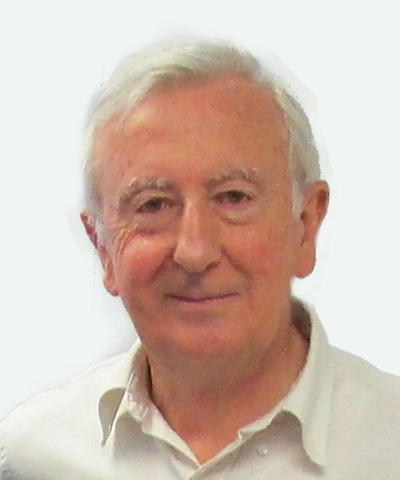
Peter Biely is an Emeritus Research Professor at the Institute of Chemistry SAS in Bratislava, Slovakia. He and his group have contributed extensively to the fields of biochemistry and enzymology of plant biomass degradation by yeasts and fungi. He served for ten years as a Chairman of the Czech and Slovak Commission for Yeasts and Associate Editor of the Yeasts Newsletter. For his achievements he received in 2011 the Order of Ľudovít Štúr (II) from the President of the Slovak Republic and in 2015 he was bestowed the Charles D. Scott Award by the American Society for Microbiology.
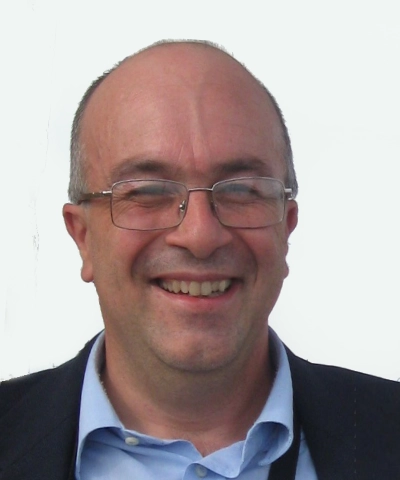
Gianluigi Cardinali holds a master's degree in Agricultural Sciences, a PhD in Fungal Biotechnology and was post doc at the Heine University in Duesseldorf. He is currently Full Professor of Microbiology at the Department of Pharmaceutical Science of the University of Perugia and deputy Rector for the Bioethical Board, and Coordinator of the microbiological group for the Biodiversity of agricultural interest by the Italian Ministry of Agriculture. He participates in national and international scientific committees for the protection and exploitation of microbial biodiversity and has covered other institutional roles for the Ministry of agriculture and for the regional government. His area of expertise and interest are the i.) fungal taxonomy and phylogenetics focused on yeasts with a particular emphasis on the delimitation and definition of the fungal species as a structure, ii) fungal and bacterial ecology in natural, agricultural and medical settings, iii) Bioinformatics applied to phylogeny and taxonomy, iv) food microbiology and transversal outreach activities focused on the relationship between science with philosophy and religion.

Marita Cohn is Associate Professor in Genetics at Lund University, Department of Biology, Molecular Biosciences. Her research focuses on the molecular mechanisms involved in the maintenance of telomeres. After receiving a PhD degree at Lund University, she was a postdoctoral fellow in the laboratory of Elizabeth Blackburn, University of California, USA, where she isolated and characterized the enzymatic activity of yeast telomerase. When starting her research position at Lund University, she established the budding yeast Naumovozyma castellii as a model system for molecular genetics research, developing molecular biology methods and tools for genetic manipulation. The research involved biochemical studies of the binding properties of telomere-associated proteins and their roles in the protection of telomeres, and characterization of the substrate recognition of telomerase. Currently she is studying the molecular and genetic mechanisms of Alternative Lengthening of Telomeres (ALT), which is a recombination-based pathway for telomere maintenance.
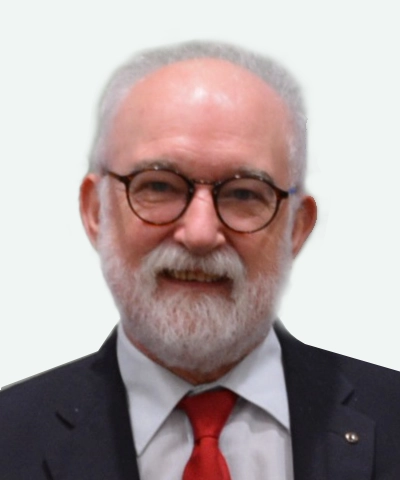
Born in Dolga Poljana, Slovenia (1954). Educated in Maribor (baking and food technical schools) and Ljubljana (BSc in Food Technology, 1983). Earned a PhD in Biotechnology at the University of Zagreb (1987) and completed postdoctoral training at the Labatt Institute, London (1989). Academic career at the University of Ljubljana (1989-2013), progressing from assistant to full professor; later active at the University of Primorska (2014-2016). Founded the Department of Biotechnology (1992) and established key biotechnology study programmes (postgraduate 1994; undergraduate 2004). Contributed to international programmes in Vienna, Maribor, Budapest, and Pécs. Mentored extensively: 145 graduate theses, 18 master's, and 55 doctoral dissertations. Led numerous national (ARRS/ARIS) and international research and infrastructure projects in biotechnology, food safety, and industrial microbiology. Published over 1900 works (SICRIS), including 223 scientific papers, book chapters, patents, and over 100 invited lectures. Recipient of multiple honors, including three honorary doctorates (Hungary, Austria), membership in international academies (IAFoST, Academia Europaea), and several national and international awards. Notable recognitions include the Jesenko Lifetime Achievement Award and the Silver Medal of Merit of the Republic of Slovenia. Appointed Professor Emeritus at the University of Ljubljana in 2020. Contributed to innovation and society through founding biotech companies, supporting the Ljubljana University Incubator, participating in international quality audits, and initiating key scientific declarations and congress networks (e.g., CEFood, FEMS, EFFoST). Also active in cultural work as a published poet, with multiple collections since 2018.

Vincent Robert is the CEO and founder of BioAware, a software company established in 2000 that develops BioloMICS, a platform used to manage, identify, analyze, and publish biological data.
He curated the yeast collection at the CBS in the Netherlands (now the Westerdijk Institute) for ten years (1999-2009). He subsequently served as Head of the Bioinformatics Group at the same institute from 2009 to 2023.
Since 2023, Vincent Robert and his team of developers have been working on new generations of BioloMICS, as well as on the development of advanced workflow systems and data analytics platforms.
In 2004, he founded MycoBank, and a few years later TheYeasts.org. He also leads database development for the Microbial Resource Research Infrastructure (MIRRI) and StrainsBook, and is responsible for the development of the database and website for the MALDIBank EU project.
Since 2002, he has been teaching mycology at the Institut Pasteur (Paris, France), and he is also a visiting Professor of Bioinformatics at the University of Perugia, Italy.

Lóránt Székvölgyi is a molecular biologist whose research dissects how chromatin-linked processes shape genome function and contribute to human disease. He developed strong expertise in Saccharomyces cerevisiae as an experimental system, using powerful yeast genetics to interrogate gene function with precision. He translates mechanistic insights from yeast into more complex cellular contexts, including human cell models. His work integrates classical genetics with advanced cell biophysics and quantitative cellular readouts to connect molecular mechanisms to phenotype. He couples these experiments with genomics and multiomics strategies to map chromatin states, transcriptional outputs, and genome organization at scale.

The conference was attended by 90 researchers from 18 countries. They presented the results of their work in 35 lectures and on 40 posters. As has become a tradition, last year young researchers were again honoured with the Best Young Scientist Poster Award.
Below you can find a list of all lectures as they were delivered within their respective sessions:
Memorial Lecture
of Yeasts
Interaction
Biology of Yeasts